
Making a Will in Queensland –
Will Lawyers Brisbane
It’s important that you make a Will becuase your family is important to you and without one, anything could happen.
Our team of family lawyers can make sure your Will is legally binding and up to date.
More than 100+ years of combined lawyer experience.













The 5 estate planning mistakes Australians make and how to avoid them
Estate planning mistakes often happen when people assume a will is the whole plan, then life events change and the paperwork does not keep up. In Australia, an estate plan is a set of decisions and estate planning documents that aim to ensure your wishes are followed when you pass away and when you cannot make decisions yourself. If you are unsure where to start, consider speaking with Queensland Family Law Practice about wills and estate planning.
What an estate plan is and why it is more than a will
An estate plan sets out how your estate is managed and who benefits from your estate, but it also covers who can act for you while you are alive. A will is a core document, yet planning involves decisions about roles, beneficiary outcomes, and how assets are distributed across different asset types. Many people make simple mistakes because estate planning isn’t straightforward and their understanding stops at writing a will.
A comprehensive estate plan often includes a will, powers of attorney, and choices about who will manage your estate administration. It may also involve trust structures, such as when a testamentary trust can be used, and how superannuation is directed. These choices can affect inheritance outcomes, tax implications, and the likelihood of a dispute.
Estate planning also has limits. It cannot guarantee that every person will be satisfied with the outcome, and it does not remove every risk of a family provision claim. It can, however, safeguard your intentions by using clear documents and sensible appointments that reflect your wishes.
For a plain language overview from a government source, see the Queensland Government guide on wills and estate planning.

How assets are distributed with a valid will and without a valid will
A valid will is the main way to have assets distributed according to your wishes. Your will names beneficiaries and usually appoints an executor to carry out your instructions, pay debts, and manage the administration of the estate. If your will is unclear or incomplete, your executor may still need extra legal steps to interpret it.
Without a valid will, assets are distributed according to state laws through intestacy rules. This means your estate can be distributed according to state laws rather than according to your wishes. For blended families, business owners, and parents of minor children, the difference can be significant because the law applies a default pathway that may not match your unique needs.
A will also does not automatically control every asset. Superannuation and some trust assets can sit outside the estate, which is why planning involves checking each asset type and how it passes on death. A common estate planning mistake is assuming one document covers everything.

The top 5 estate planning mistakes to avoid in Australia
The top 5 estate planning mistakes usually come from repeating failure modes. People rely on outdated wills, appoint the wrong person, forget superannuation, ignore tax implications, or use a diy estate approach that misses key estate planning documents. Each blunder can increase the chance of dispute, delay, or a result that does not reflect your wishes.
- Relying on outdated wills after life events
- Appointing the wrong person as executor or attorney
- Forgetting superannuation and beneficiary nominations
- Ignoring tax implications and tax planning considerations
- Using DIY estate documents that create gaps or invalidity risks
Below you will find the mistakes to avoid and practical steps to safeguard a comprehensive estate plan.
Relying on outdated wills after life events
Outdated wills are one of the biggest estate planning mistakes because the document may no longer match your family, assets, or intentions. A major life event such as marriage, separation, divorce, the birth of children, new family members, or the death of a beneficiary can change what is fair and what you want. If you forget to update, assets may be distributed according to your wishes from years ago, not your wishes today.
An outdated will can also create ambiguity. If a beneficiary is named incorrectly, or a gift refers to an asset you no longer own, the executor may need extra legal steps to interpret the will. That added complexity can slow estate administration and increase dispute risk, particularly in blended families.
A practical safeguard is to create a review habit tied to life changes and major life events. If your will was signed before a major life event or before a major asset change, it is time to review it and consider getting professional help with preparing or updating a will.
Appointing the wrong person as executor or attorney
Choosing the wrong person is a common mistake that can create friction and delay. An executor is the person you appoint to manage your estate after you pass away, including dealing with probate where required and organising the administration of the estate. A power of attorney is the person you appoint to make decisions for you while you are alive but unable to act, depending on the document and scope.
The wrong person might be overwhelmed, unavailable, or have a conflict of interest. Even a trusted friend or family member can struggle with paperwork and family dynamics. If an appointment looks biased, beneficiaries may challenge decisions and a dispute can escalate, especially where a family provision claim is possible.
When you appoint an executor or attorney, focus on capability and neutrality. If you want guidance on appointments and decision making plans, see Power of attorney and consider tailored legal advice.
- Choose someone organised who can keep records
- Choose someone steady who can communicate calmly
- Check they are willing to act
- Consider whether family tensions make neutrality important

Mistake three forgetting superannuation and beneficiary nominations
Superannuation is a frequent estate planning mistake because many people assume it is gifted under the will. In practice, superannuation is commonly held in a fund and paid as a death benefit, which may be directed by a binding nomination or decided by the fund trustee under its rules. This means your superannuation may not be distributed according to your will even if your will is current and clear.
This can create unintended inheritance outcomes. A beneficiary named in your will might not receive superannuation at all, while another person might receive a large portion through the fund. That mismatch can also trigger dispute when expectations are not aligned.
To avoid common pitfalls, list your superannuation accounts and check how each one is set up, then ensure it fits your broader estate plan. If trust structures are relevant, it can help to ask when a testamentary trust can be used and what it does and does not cover in your circumstances.
Ignoring tax implications and tax planning
Ignoring tax implications is a common estate planning mistake because tax can change what beneficiaries actually receive. Australia does not have a general inheritance tax in the way some countries do, but capital gains tax can be relevant when certain assets are sold. Tax on income can also apply to income earned by the estate during administration.
Tax issues can overlap with executor decisions. If the estate holds shares, property, or business interests, choices about selling, transferring, or retaining assets can affect the overall outcome. Without tax planning, an estate can unintentionally reduce what is available for beneficiaries.
Good planning means identifying assets likely to be sold, keeping basic records, and knowing when to seek professional advice, including financial advice if needed. If probate and administration are part of the picture, see Deceased estates and probate and Deceased estate administration.

Using a DIY estate approach that misses estate planning documents
A DIY estate approach can feel convenient, but it often creates avoidable pitfalls. Signing and witnessing rules can be strict, and small errors can make a will invalid or unclear. Another common error is generic wording that does not fit your family structure or assets, which can increase dispute risk.
DIY approaches also tend to miss connected documents and decisions. People prepare a will but skip powers of attorney, forget superannuation checks, or ignore trust structures that may be appropriate. Those gaps can cause assets to be distributed in ways that do not reflect your wishes.
If you want to reduce common errors in estate planning, it is often safer to seek professional advice rather than rely on templates. Start with wills and estate planning and ask what other estate planning documents you may need.
Probate and estate administration basics and what your executor does
Probate is the court process that confirms a will and gives the executor authority to deal with the estate where required. Estate administration is the practical work of collecting assets, paying debts, handling tax matters where needed, and distributing assets to beneficiaries. Even with a clear will, the process can involve detailed steps and communication with institutions.
An executor typically identifies estate assets, secures property, notifies relevant organisations, and keeps records of payments and decisions. If there is conflict, the executor may face challenges and claims, including a family provision claim. A family provision claim is where an eligible person asks a court for provision from an estate.
If you are planning your own estate, choosing a capable executor and leaving clear instructions can reduce stress for loved ones. If you are acting as executor, it may help to seek legal advice early through deceased estates and probate support.

How to avoid common estate planning mistakes and protect your legacy
Avoiding common estate planning mistakes comes down to a few repeatable habits. Map your assets and how they pass on death, then align documents so assets are distributed according to your wishes rather than by accident. Review appointments and updating your estate after life changes because a comprehensive estate plan should evolve over time.
It also helps to be realistic about what estate planning does not cover. It cannot remove every risk of dispute or prevent every family provision claim, but it can reduce ambiguity and strengthen your position with clear, current documents. Where trust structures are relevant, understanding how testamentary trusts work can improve flexibility for beneficiaries.
Quick checklist to safeguard your comprehensive estate plan
- Confirm your will is current and reflects your wishes
- Check who you appoint as executor and whether they are willing and suitable
- Ensure powers of attorney are in place and match your intentions
- List superannuation accounts and review beneficiary nominations
- Flag potential tax implications such as capital gains tax and tax on income
- Note trusts, companies, and business interests for succession planning
- Store documents securely and tell key people where they are

When this may not be the right fit and when to seek professional advice
If your situation is simple and stable, you may only need a straightforward will and basic appointments. Even then, mistakes can lead to outcomes you did not expect, especially if superannuation or blended family arrangements are involved. If you are unsure, seeking professional advice early can prevent expensive fixes later.
Consider getting help now if you have had major life changes, if you own a business, if you have a blended family, or if you expect dispute risk. You may also need support if you want trust structures or you are concerned about a family provision claim. If succession planning is part of your goals, see succession planning.
What to bring to a consultation
- A list of assets and how they are owned
- Details of superannuation funds and any nominations
- Names and details of proposed executor and beneficiaries
- Notes on life events and family structure changes
- Any existing estate planning documents

Frequently Asked Questions
Summary and next step
- An estate plan is more than a will and should cover roles, documents, and how assets pass on death.
- The top 5 estate planning mistakes include outdated wills, the wrong person appointed, forgotten superannuation, ignoring tax implications, and diy estate pitfalls.
- Without a valid will, assets are distributed according to state laws, which may not reflect your wishes.
- Good planning can reduce dispute risk, support smoother estate administration, and provide peace of mind.
If you want expert estate planning tailored to your circumstances, contact Queensland Family Law Practice for wills and estate planning, powers of attorney, deceased estate administration, contesting wills and family provision matters, and succession planning. Getting the structure right helps ensure your wishes are carried out and assets are distributed according to your wishes, protecting your legacy for the people who matter most.
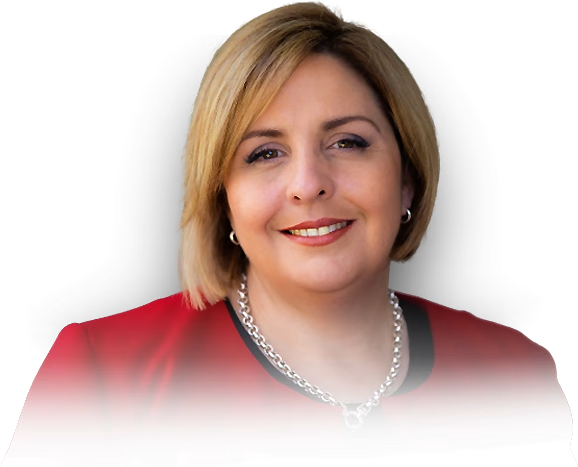
Reviewed by: Tracey McMillan, Principal at Queensland Family Law Practice.
Disclaimer: This article is for general information only and not legal advice.