

Separation during the holiday period can feel overwhelming for any parent, particularly when school holiday routines, special occasions and family traditions change all at once. For separated parents in Australia, this time of year often brings questions about parenting arrangements, time with children and how family law applies. The reality is that holidays can be tough, but with planning and support they can also be manageable and even enjoyable. If you are facing a holiday season following separation, this guide offers practical tips and encourages you to seek tailored legal advice early.

Holiday separation and why it feels harder
Holiday separation feels harder because routines disappear, emotions run high and children are more aware of family changes during special occasions. The holiday season often centres on family, loved ones and tradition, so a separation can feel more obvious than during the school term.
During a school holiday, children will spend time away from their usual structure. That can increase stress for a child who is adjusting to separation and divorce. Parents are also more likely to notice the absence of shared family time, especially during Christmas or birthdays.
Common pressure points include:
- Changes to long-standing family traditions.
- Extended families wanting to visit or host.
- Work commitments clashing with holiday plans.
- The first holiday period or first Christmas without your children.
Acknowledging that this season is tricky is an important first step. It helps parents approach holiday parenting arrangements with empathy rather than frustration.
Tips for separated parents planning holiday time
Planning well in advance is one of the most effective tips for separated parents. Clear arrangements reduce the likelihood of disagreement and make the holiday period less stressful for everyone.
A practical approach includes:
- Discussing holiday plans early in the year, not days before.
- Writing down agreed parenting arrangements for the holiday period.
- Being realistic about travel, screen time and work commitments.
- Prioritising quality time over trying to pack in every day.
For example, some separated parents agree to split school holiday blocks, while others rotate Christmas Day each year. There is no single right answer. The key is commitment to a plan that focuses on the best interests of the child rather than winning time.
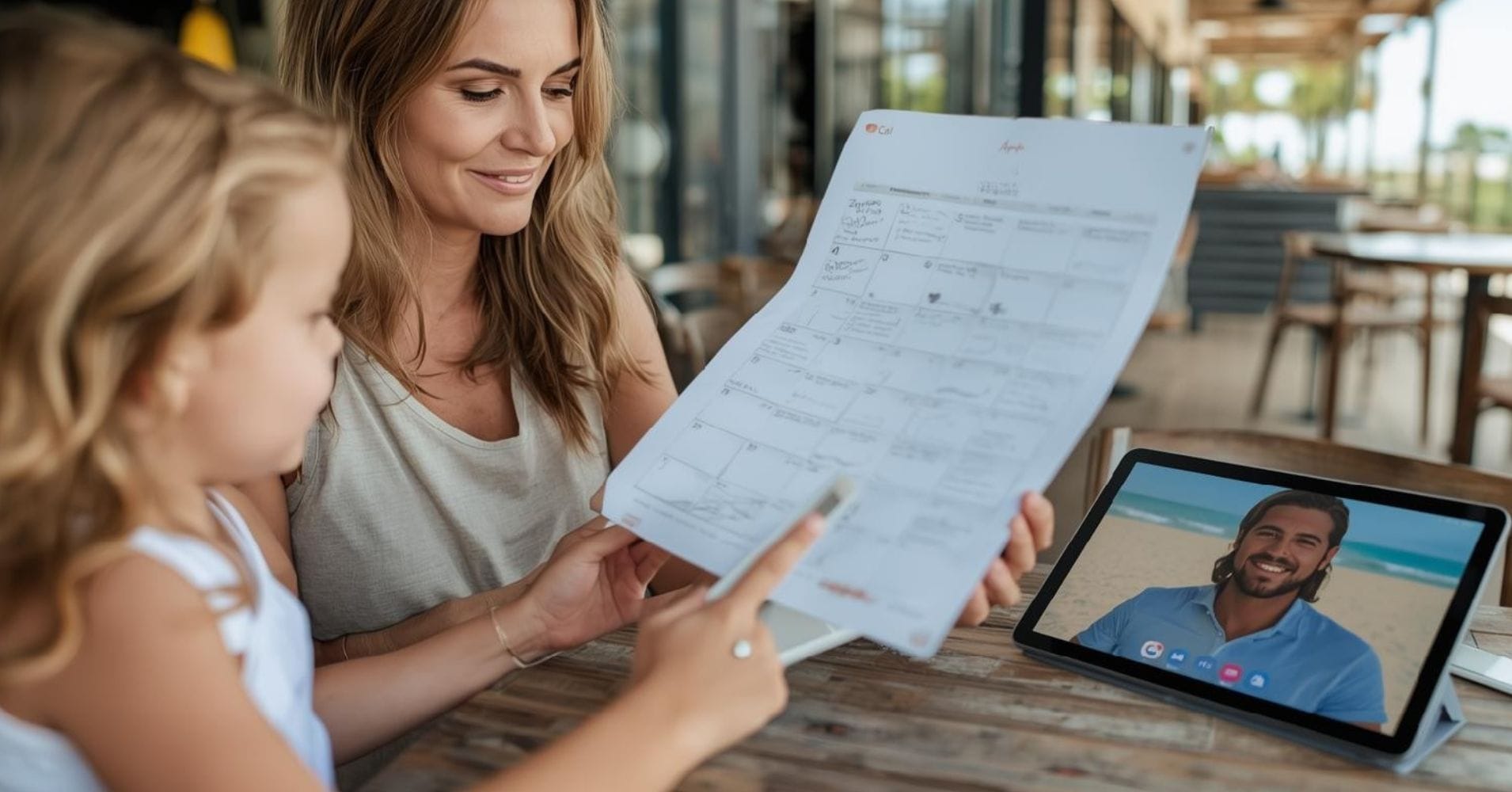
School holiday and Christmas parenting arrangements
School holiday and Christmas parenting arrangements often differ from regular term-time schedules. Children during school holidays may spend longer blocks with each parent, which can be positive when managed well.
Common holiday parenting plans include:
| Arrangement type | How it works | When it suits |
|---|---|---|
| Split holiday blocks | Children spend half the holiday with each parent | Longer school holidays |
| Alternating special days | Christmas Day alternates each year | Christmas holidays |
| Shared special occasions | Part of the day with each parent | Birthdays or key events |
The Christmas period can be particularly emotional. For separated or divorced parents, the first Christmas after separation often requires flexibility. Creating a clear parenting plan for Christmas holidays helps children know what to expect and allows them to enjoy time with both parents and extended families.
Legal considerations during the holiday season
Family law in Australia places the best interests of children at the centre of any parenting arrangements. Holiday time is no exception. If you have a formal parenting plan or court orders, those documents usually outline how holiday periods are handled.
Important legal points to remember include:
- Parenting plans can be informal but should be clear and workable.
- Court orders are legally binding and must be followed.
- Changes should be agreed in writing where possible.
- Mediation may help if parents cannot agree.
An experienced family lawyer can explain how holiday parenting plans interact with existing arrangements and help you manage disputes before they escalate. Seeking legal advice early is often less stressful than dealing with urgent issues days before Christmas.
Do holiday arrangements override regular parenting orders
Generally, holiday provisions in parenting arrangements override the usual weekly schedule. If there is uncertainty, legal advice can clarify your specific situation.
Can one parent take a child interstate during school holidays
Travel may be allowed if it aligns with parenting arrangements. Written consent or court approval may be required in some cases.

Creating new traditions after separation
Separation does not mean the end of meaningful holidays. Many families find that creating new traditions helps children adjust and feel secure. New traditions can be simple, such as a special breakfast, a visit to a familiar place or a shared activity each year.
Children benefit when parents:
- Speak positively about both households.
- Encourage excitement about upcoming holiday time.
- Respect that each parent may parent differently at times.
A quick scenario to consider is a child who spends Christmas morning with one parent and Boxing Day with the other. Over time, each household builds its own tradition, making the holiday season more peaceful and enjoyable.
Focus on the best interests of your child
Focusing on the best interests of children is more than a legal concept. It is a practical guide for everyday decisions. Children cope better when they feel safe, heard and free from adult conflict.
Ask yourself:
- Will this arrangement help my child feel settled?
- Am I prioritising time or wellbeing?
- Is there room for compromise?
When parents co-parent with respect, children are more likely to enjoy quality time with each parent during the holiday period and beyond.

Getting in touch and communicating effectively
Getting in touch with the other parent early and respectfully can prevent many holiday disputes. Communication does not need to be frequent, but it should be clear.
Helpful communication tips include:
- Use written messages to confirm dates and times.
- Keep discussions child-focused, not emotional.
- Consider communication via phone or agreed apps if face-to-face is difficult.
If communication breaks down, mediation can provide a structured and less stressful way to resolve issues without escalating to court.
When this may not be the right fit
Informal holiday arrangements may not be suitable where there is family violence, high conflict or repeated breaches of agreements. In these situations, formalising arrangements through legal channels may be necessary to protect children and provide certainty.
How to judge if you need this now or later
If the holiday season is approaching and plans are unclear, it is likely time to act now. If arrangements are working but feel fragile, reviewing them later with a family law team can still be valuable.

Where this connects to parenting plans and next steps
Holiday arrangements work best when they align with an overall parenting plan. Reviewing or updating your parenting plan before the holiday season can help you manage future school holidays and special occasions with confidence.
If you are a parent in Brisbane or elsewhere in Australia navigating separation during holidays, Queensland Family Law Practice can help you manage parenting arrangements with clarity and care. Our family law team understands how stressful this season can be and can provide practical legal advice tailored to your family. Contact us to discuss how we can help you manage holiday parenting plans and move forward with confidence.
Found this article useful? Add Queensland Family Law Practice as a preferred source and our articles will show up more often when you search on Google.